On-campus · Jun 2026
Software Developments Engineering(SDE) at ION Group
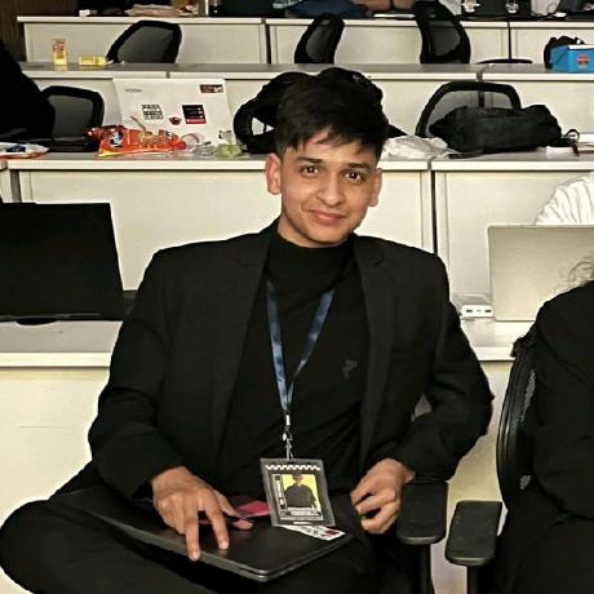
I\’m Kamalpreet Singh, and I\’m currently in my fourth year of college. I\’m excited to share that I\’ve been successfully placed at ION. Along my academic journey, I\’ve actively participated in various hackathons, and most notably, I had the privilege of winning the Smart India Hackathon (SIH) organized by the Government of India in 2022. Additionally, I\’ve achieved success in numerous college-level hackathons. I\’m a well-rounded individual, actively engaging in both technical and non-technical activities. I\’ve been a part of several societies such as MLSC, OWASP, and ACM . Within the OWASP society, I served as the secretary. This diverse involvement in technical and non-technical domains has been extremely beneficial for my personal and professional growth.
- Outcome
- Selected
- Format
- Virtual
- Panel
- Technical panel
What was the procedure of the placement that took place? (Shortlisting criteria, coding or aptitude test, number of interviews)
The placement process at ION was a multi-step journey that began with an initial Google form-based shortlisting phase, resulting in approximately 820 candidates making it to the next stage. The Online Assessment (OA) test featured 14 Multiple Choice Questions (MCQs) covering computer science fundamentals and aptitude, along with two medium-level coding questions. One of these coding questions focused on Object-Oriented Programming (OOP) to develop a ticket management system. Following the OA, only 150 students were shortlisted in SDE role, with ION offering positions in both Technical Analyst and Software Development roles. For the Technical Analyst role, 100 MCQs were administered and 100 students were shortlisted in that role, resulting in a total of 250 students shortlisted. I was shortlisted in SDE role. Post-OA, there were five interview rounds, with the first being a comprehensive technical interview lasting approximately 1 hour and 15 minutes, covering topics such as Data Structures and Algorithms (DSA), OOP, and puzzles. In the OOP segment, candidates were asked to explain the four pillars of OOP and design a payment gateway using them. The DSA portion involved digitizing token system in hospitals and displaying them in a patient appointment order system, with discussions on the use of various data types like queues, linked lists, hash maps, and priority queues for emergency systems. The second round was a case study-based non-technical interview, followed by a stakeholder interview in the third round where company stakeholders delved into candidates\’ projects and resumes, along with HR-related questions. The fourth round involved a visit to ION\’s headquarters in Noida, which was named as \”ION day,\” with around 25 students making it to this stage. Each round served as an elimination round. During the visit to ION headquarters, a meeting with the country head included a group discussion (GD) round with 9-10 students in each batch. The country head observed and evaluated candidates, resulting in the elimination of 4 students. Finally, the fifth round of interviews was conducted by another country head, in this case, an Italian individual. This round primarily assessed candidates\’ communication skills, evaluating their ability to communicate effectively with international colleagues in a real-world setting. The entire process was a rigorous and thorough evaluation to select the best-suited candidates for ION\’s various roles. And at last about 18 students were selected of which 9 were for Software developer roles.
What was the difficulty level of the interview? (1- very easy, 10-very difficult)
7 out of 10
What are the things students should focus on, in order of priority?
In your third year, it\’s crucial to dedicate maximum time to Data Structures and Algorithms (DSA) as these are often central to online assessments in job applications. Ensure you engage in daily DSA practice, gradually progressing from basics to more complex problems. Simultaneously, invest in enhancing your skills by staying updated with the latest trends through books, articles, and online communities. When working on projects, integrate DSA concepts where applicable to boost your skills and project quality, but manage your time wisely to meet project deadlines. Balancing your academic responsibilities and maintaining a CGPA above 8, which is generally considered decent for most companies, is also crucial. Always remember that your primary goal is securing a job, and both your academic performance and DSA proficiency play vital roles in achieving that.
According to you, what role do extracurricular activities as well as participation in societies play?
Absolutely, extracurricular activities are pivotal in shaping a well-rounded profile for job interviews. Interviewers often use these activities to understand your soft skills and your ability to manage multiple responsibilities. Serving as part of a society or club showcases your leadership and teamwork skills, as it involves coordinating with diverse individuals and organizing events. This can leave a positive impression on the interviewer, demonstrating your ability to handle broader responsibilities. Additionally, participation in hackathons highlights your problem-solving and technical skills, making you a more well-rounded candidate. So, don\’t underestimate the power of extracurricular activities; they can significantly enhance your job prospects.
Were there any companies you got rejected from after appearing for their interview? If yes, then tell us about your rejection story and what do you think were the reasons for your rejection?
Indeed, facing multiple rejections before successfully making it past the Online Assessment (OA) is a common part of the job application journey, and it can be especially challenging in a highly competitive setting like Thapar, where around 1200 candidates apply, but only about 800 proceed to the next stage. The fierce competition underscores the importance of perseverance and ongoing self-improvement. It\’s essential to view rejections as opportunities for growth, using feedback and experiences to refine your skills and adjust your approach. Additionally, a well-crafted resume can give you a competitive edge by effectively showcasing your qualifications and experiences, making a positive first impression on potential employers. So, keep refining your skills and optimizing your application materials; success often follows persistence and continuous improvement.
What message would you like to give to your juniors regarding the stress they go through during placement season?
Navigating the placement season can indeed be a stressful experience due to the intense competition and the element of luck involved. It\’s important to keep in mind that while competition is fierce, every opportunity you seize increases your chances of success. Approach each company with the intention of giving your absolute best. Stress can be counterproductive, so aim to stay calm and focused. Understand that not every company will be the right fit, and sometimes rejections are blessings in disguise. Keep honing your skills, learning from each experience, and remember that persistence, dedication, and a positive attitude can make a significant difference in your placement journey.