On-campus · Jun 2026
SDE-1 at Zomato
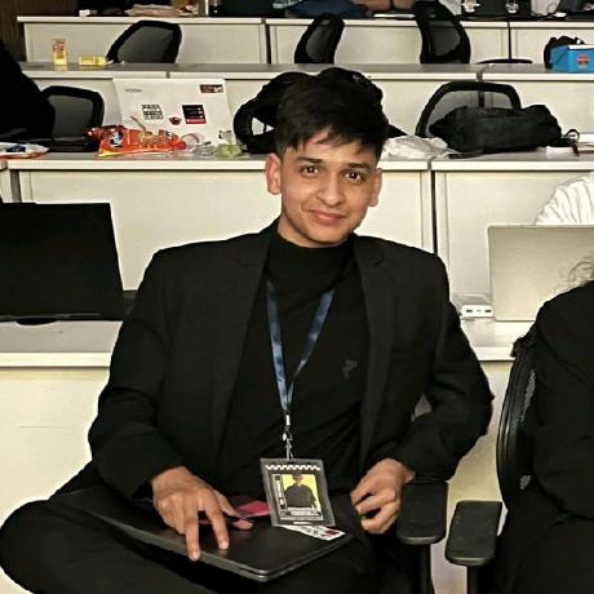
I\’m Gaurav, currently pursuing Computer Engineering at Thapar University. I currently maintain a CGPA of 9.26, which reflects a strong academic performance. I believe that a high CGPA is important because several companies this year have set CGPA cut-offs. Apart from my academics, I have been actively coding for the past 2.5 years, participating in coding contests on leetcode, and consistently achieving competitive rankings. I also have a little interest in finance.
- Outcome
- Selected
- Rounds
- 3
- Format
- Virtual
- Panel
- Technical panel
What was the procedure of the placement that took place? (Shortlisting criteria, coding or aptitude test, number of interviews)
The company mentioned a CGPA requirement of 7.5, but there was also an unofficial preference for those with CGPAs around 8.9. Students with CGPAs above 8.9 were all chosen,while those with CGPAs between 7.5 and 8.9 were assessed based on their prior experiences and projects, and only a few were selected. Everything took place on the same day. Our test was scheduled for around 2 pm, followed by two rounds of interviews conducted at approximately 5 pm. Both interviews were technical in nature, with some HR questions asked at the end of each interview.
What was the difficulty level of the interview? (1- very easy, 10-very difficult)
I think 8.5-9.
Tell us about the written/online test. (Aptitude, Coding, Test Platform, etc)
About 270 students were chosen to take an online test, which was conducted in the labs at TIET. The test comprised 13 multiple-choice questions (MCQs) and 3 coding questions, with a time limit of 20 minutes for the MCQs and 60 minutes for the coding questions. The MCQs covered topics related to computer fundamentals, with a focus on DSA, OS, and DBMS. The difficulty level of the MCQs was moderate, and I could confidently answer approximately 10-11 of them. As for the coding questions, I managed to complete one entirely and half of the second one. Unfortunately, I couldn’t finish the third coding question. One of the questions involved a priority queue, which was directly inspired by a problem I had encountered on LeetCode during one of my previous coding contests. The second question revolved around the sliding window approach, but the optimal approach didn’t strike me at that time, so I used a brute force method, resulting in only a few test cases passing. Unfortunately, I was unable to solve the third question, which revolved around backtracking and graph concepts.
Tell us about the interview round 1 including the questions that were asked.
Out of the 270 students who appeared for the online test, only 13 were shortlisted for the first round of interview. The first interview lasted approximately 1 hour and 15 minutes. It began with the interviewer asking for my introduction, followed by a discussion on the projects I had included on my resume. It’s very important to have a good understanding of your projects. While my projects weren’t extremely complex, I had developed them independently, so I had an in-depth knowledge of them. During this discussion, the interviewer asked about the database embedded in one of my projects and the encryption techniques we had used. Thanks to my minor in cybersecurity, I was able to answer easily. After that, I was presented with a standard question often asked in previous years, which was related to designing a music player with three functions: playing the next song, playing a random song, and playing a song by its ID. We had discussions about the data structures and various approaches that could be employed for this task. I was also asked a DBMS query, in my case it was an easy one. But they generally asked medium-level queries. Then He asked questions related to database normalization. Rather than asking directly about normalization, the interviewer asked about why I had designed certain tables in my DBMS projects and how I had gone about normalizing them. Following that, there were some questions related to operating systems, although I can’t remember them exactly. At the end of this interview, I was asked an HR-related question: Why did I want to join Zomato?
Tell us about the HR interviews, if any, specifying the number of rounds and questions asked.
The interview began with a brief introduction, and the interviewers asked about my previous interview experience. Then, they asked me a series of questions related to operating systems, particularly focusing on memory management and paging concepts. They asked me about page replacement algorithms and, in response, I discussed several approaches. They then requested me to write code for the Least Recently Used (LRU) algorithm. Following that, They questioned me about priority scheduling algorithms, and I was asked to implement a priority queue. After that, they questioned me about the Boyer-Moore Voting algorithm. After that I was also asked a hard question in which an easy subpart was to find the number of islands in the matrix, and number of cells each island has, and a hard subpart was to find the shape of each island. Towards the end of the technical interview, I was asked to write code for Peterson’s solution, which is a synchronization algorithm. In the HR portion of this round, the questions were a bit tricky. They asked me to specify the features I particularly liked in the Zomato app and inquired whether I preferred Zomato or Swiggy.”
What are the things students should focus on, in order of priority?
Choose a programming language and maintain a regular practice of DSA. Participate in coding contests on a weekly basis. Even if you don’t particularly enjoy software development, focus on completing the necessary projects related to your curriculum, especially in subjects like DBMS and Software Engineering. Strengthen your basics in technical subjects and read about the experiences of others in their interviews, often found in the LeetCode discussion section. For example, nowadays, interviewers are frequently asking questions about system design, a topic that wasn’t traditionally as common in the past.
What would you like to advise juniors for cracking the technical round of this company?
Take your time when formulating your problem-solving approaches. Additionally, effectively communicating your solutions to the interviewer is very important.
According to you, what role do extracurricular activities as well as participation in societies play?
I wasn\’t involved in any college societies. Personally, I think I can\’t manage multiple things at the same time. Some of my friends hold significant positions in various societies because they have the ability to manage. It all boils down to personal preferences. So I don\’t think it plays a huge role.
Were there any companies you got rejected from after appearing for their interview? If yes, then tell us about your rejection story and what do you think were the reasons for your rejection?
I made it to the final round with four different companies but didn’t secure a position. The first company was D.E. Shaw, which was the first to visit our campus. I was one of the six finalists but, unfortunately, I didn’t get the job. I also reached the final round with Barclays, where I had to answer three coding questions. But it was a diversity hiring so I wasn’t selected. I was also shortlisted for the JPMC “Code for Good” program and participated in a hackathon at their Hyderabad campus. Additionally, I was shortlisted for the Cisco Ideathon competition, which involved three interview rounds. And then Zomato happened.